
Why Does My Knee Still Hurt After Surgery?
There is not one single reason. Persistent pain can relate to healing, mechanics, infection, nerve-related pain, ongoing inflammation, or other problems that deserve careful evaluation.

What Can Be Normal — and What May Need a Closer Look
Pain, swelling, and stiffness are common in the early weeks after surgery. Recovery often takes time. But pain that is not improving after several months, pain that worsens, or pain that significantly limits sleep or daily activity may need a more focused explanation.
Common Categories of Ongoing Pain
Pain after knee replacement can sometimes be related to loosening, malalignment, instability, or another structural issue with the implant. These problems should be assessed by an orthopedic surgeon. They may require revision surgery or other orthopedic intervention and are not the target of a minimally invasive embolization pathway.
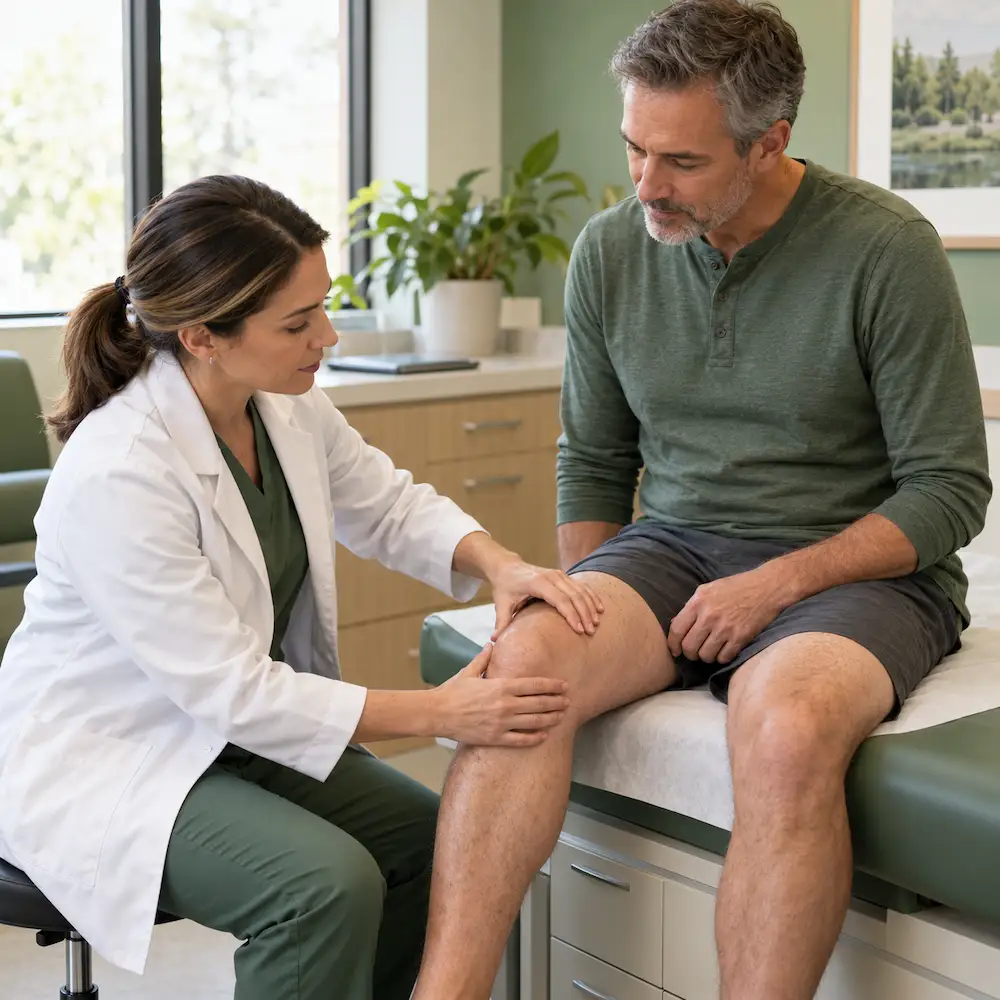
Persistent Pain Does Not Always Mean The Surgery Failed
Many patients worry that continued pain means something went terribly wrong. Sometimes a serious problem is present and needs urgent care. Other times, the issue involves inflammation, soft tissues, nerves, or pain pathways that are separate from the implant itself.
The right next step is a systematic evaluation — not guesswork and not waiting indefinitely.
Who is Most at Risk For Persistent Post-Surgical Knee Pain?
Persistent pain after total knee arthroplasty (TKA) is a recognized clinical problem, defined as pain lasting at least 3–6 months after surgery. It affects an estimated 10–20% of patients who undergo knee replacement. Risk factors include:
- Pre-operative chronic pain or widespread pain sensitivity
- History of depression or anxiety
- Severe pre-operative joint deformity
- Certain surgical or anesthesia-related factors
- Obesity or diabetes affecting healing
- Prior knee surgeries
Having one or more of these risk factors does not mean your pain cannot be addressed — it means the evaluation needs to be thorough.
Red Flags — Contact Your Surgeon
or Seek Urgent Care Right Away if You Have:
- Fever or chills
- Drainage, pus, odor, or increasing redness around the incision
- New calf swelling, leg pain, or shortness of breath
- A knee that suddenly becomes much more painful or unstable
These symptoms may indicate a surgical complication that requires immediate evaluation. Do not wait.